Showing posts with label Dental Facts. Show all posts

Wednesday, March 14, 2012

What's In Toothpaste?

Toothpastes can be made up of different “ingredients”; however the two main must-have ingredients are:
  1. Fluoride
  2. Abrasives
Fluoride is crucial because it provides the restoring capability to toothpaste. Fluoride incorporates itself into the teeth’s enamel. This strengthens the teeth, making them more resistant to decay. Also, the fluoride helps restore areas of demineralized enamel in early stage cavities.
The abrasives are what actually clean the teeth. Tooth plaque is sticky and must be physically removed. This is what the abrasives do. They provide “grit” so plaque can be scrubbed away. Abrasives are usually in the form of calcium carbonates, calcium phosphates, or another similar compound.
Other toothpaste ingredients can include:
Peroxides (some whitening toothpastes contain this)
Potassium Nitrate (contained in sensitivity toothpastes)
Surfactants (creates the foaming action to help spread the paste around)
Flavoring agents
Sweeteners (such as xylitol)
Preservatives

Thursday, February 9, 2012

How Much Sugar Is in a Coke?

1 20 oz bottle of Coca-Cola has 65g of sugar.

1 teaspoon = 4.2 g of sugar


Put a little over 15 spoonfuls of sugar in a glass. That's how much sugar is in a Coke.

For those wondering, a 12 oz can of Coke contains 39g sugar (a little over 9 spoonfuls of sugar)

Monday, November 7, 2011

How Much Radiation Is in a Dental X-Ray?

There are a few different factors that affect how much radiation is given off during a dental x-ray. However, with advancements in technology, especially digital systems, x-rays require very low dose radiation. Radiation dosage can be measured in units called millirems (mrem). A typical dental x-raytaken digitally exposes a patient to less than 0.5 mrem.

To put things in perspective, an average resident of the U.S. receives over 360 mrem every year from background sources. This comes from all over the place: outer space, radioactive materials in the earth, small amounts of radioactive material in foods and products that we use, even over people. Variances in lifestyle likewise cause variances in each individual's total exposure. For example: an individual who flies often is exposed to more background radiation than someone who does not.

While steps should be taken to limit x-ray radiation exposure, dental x-rays are very low dose and are crucial for proper diagnosis. Without them, much of the oral cavity cannot be viewed.

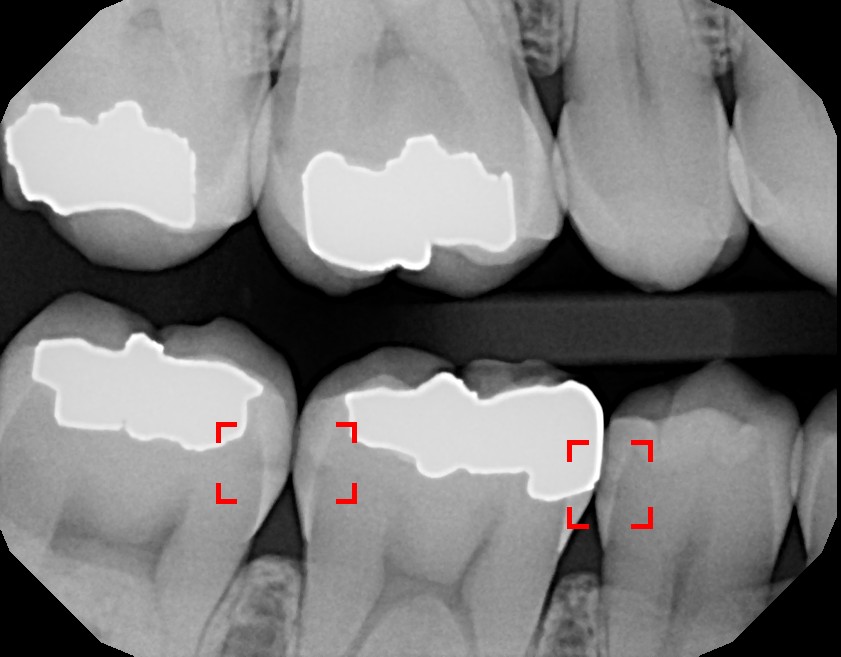
Bitewing x-ray showing cavities between the teeth that cannot be seen upon visual inspection of the mouth. Without x-rays, these would not have been detected until they were massive cavities...most likely requiring more intense treatment such as a root canal or extraction.

Tuesday, October 25, 2011

Why Is Fluoride Good for Your Teeth?

  • Remineralizes and strengthens areas of weakened enamel
  • Inhibits the loss of minerals from teeth
  • Fights against bacteria colonization
  • Decreases teeth sensitivity

Monday, October 17, 2011

Are Baby Teeth Important?

Unfortunately, we see it too often. A child gets a cavity and the situation is ignored because “it’s a baby tooth”. Baby teeth are very important. If they were not, we would not have been created to have them
Here are 5 reasons why baby teeth are very important:
  1. They reserve the necessary space for the permanent teeth. If a baby tooth is lost early, the space can collapse and create space issues for the permanent teeth.
  2. They contribute to facial development and anatomy of the surrounding structures. (This includes the development of the permanent teeth. If an infected baby tooth goes untreated it may permanently harm the developing tooth underneath it.)
  3. They aid in proper speech development.
  4. They aid in nutrition by allowing proper chewing. Missing or decayed teeth may cause a child to resist eating certain foods.
  5. They are the learning blocks for developing proper hygiene. If hygiene is not established as being important with baby teeth, then hygiene will not be important on their permanent teeth either.